


Using a surrogate to build your family is a significant financial commitment, but it does not have to be out of reach. While the average cost of a comprehensive surrogacy journey in the U.S. typically ranges from $150,000 to $180,000, savvy Intended Parents can significantly reduce their out-of-pocket expenses by leveraging employer benefits, strategic financing, and grants.
If you are searching for “inexpensive surrogacy” options and ways to lower surrogacy costs, it is critical to balance cost savings with legal safety. Below is your 2026 guide to funding your journey responsibly.
Key Takeaways:
- Companies using Carrot, Progyny, or Maven often cover substantial portions of surrogacy costs.
- “Indy” journeys avoid agency fees (saving ~$25k–$40k) but carry higher legal and financial risks if the match fails.
- Non-profits like Baby Quest and Gift of Parenthood award grants that can provide substantial relief for intended parents.
- Under current rules, IVF costs for Intended Parents are often tax-deductible, but surrogate compensation generally is not.
- Specialized lenders like CapexMD offer loans with no prepayment penalties specifically for fertility.
1. Compare Global Surrogacy Costs
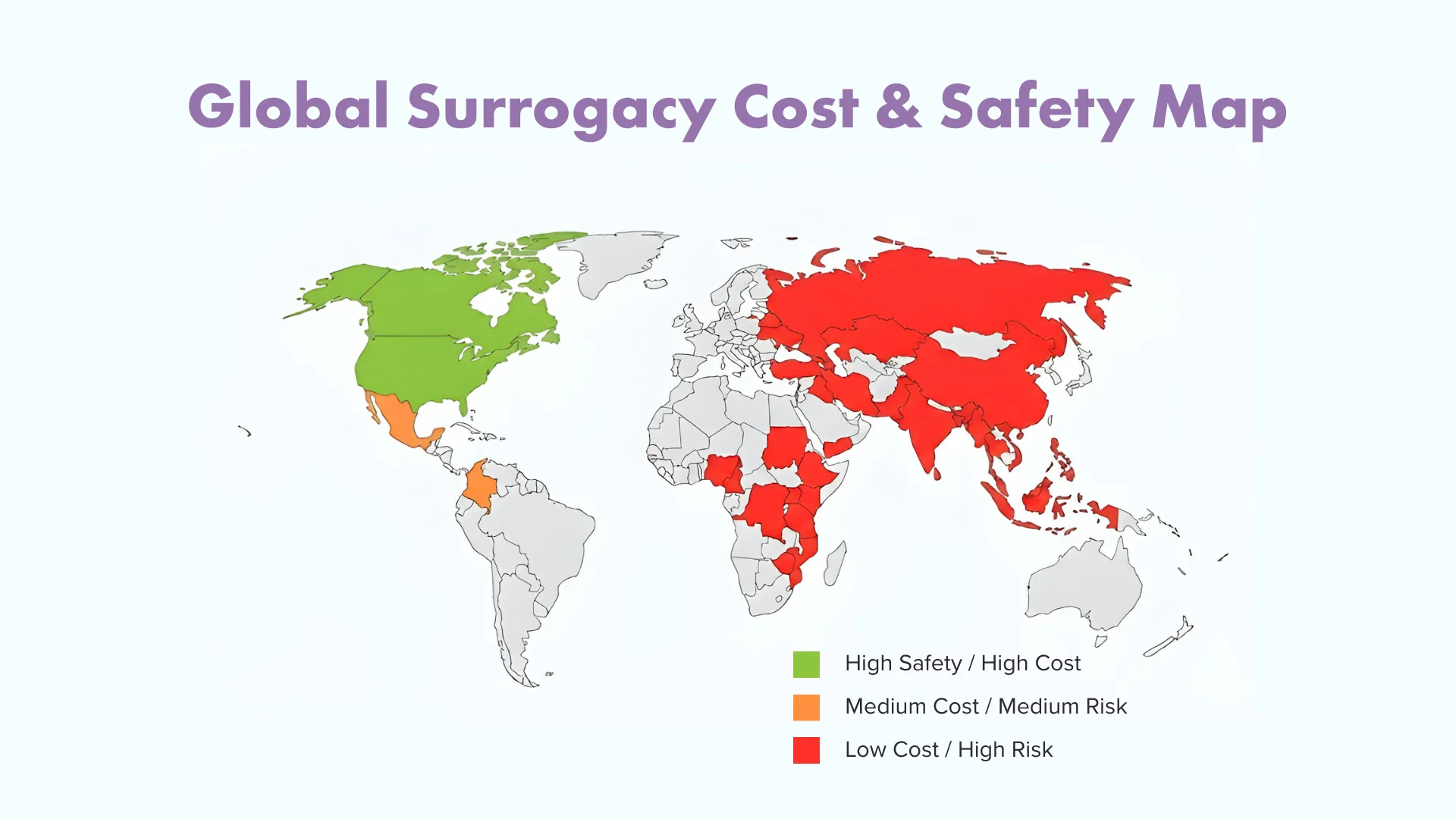

One of the most common ways to lower costs is to look internationally. However, lower price tags often come with higher legal risks or lower medical standards.
Global Surrogacy Costs & Risk Comparison (2026)
| Country | Est. Cost | Legality for Foreigners | Risk Level |
|---|---|---|---|
| USA (Agency) | $150,000 – $180,000 | Fully Legal & Protected | Low (Gold Standard) |
| USA (Independent) | $100,000 – $130,000 | Legal | Medium (No agency protection) |
| Canada | $75,000 – $90,000 | Altruistic Only (No Pay) | Low (But very long wait times) |
| Greece | $85,000 – $100,000 | Altruistic Only | Low |
| Mexico | $75,000 – $110,000 | Protected in Specific States | Low/Medium |
| Colombia | $65,000 – $80,000 | Protected by Court Ruling | Low/Medium |
| Ukraine | $50,000 – $65,000 | Legal (Married Hetero Only) | Medium (Due to conflict) |
| Georgia | $50,000 – $65,000 | Legal (Married Hetero Only) | Medium (Regulatory changes pending) |
| Cyprus | $60,000 – $70,000 | Unregulated | High (No legal enforcement) |
| Kenya/Nigeria | $30,000 – $45,000 | Unregulated | Very High (Medical/Legal risks) |
While countries like Kenya or Cyprus offer low sticker prices, the lack of legal regulation means you have zero protection if the surrogate changes her mind. Furthermore, obtaining U.S. citizenship for the child can be a complex legal hurdle in these jurisdictions.
2. Maximize Employer Fertility Benefits
The single most effective way to make surrogacy “inexpensive” and affordable is to utilize corporate benefits. In 2025, over 60% of large U.S. employers offered some form of fertility coverage. Many leading organizations are explicitly using fertility benefits to attract top talent, which is a huge advantage for Intended Parents.
Check your HR handbook for these specific benefit providers:
Carrot Fertility
Often provides a “wallet” of funds (e.g., $30,000) usable for agency fees, legal costs, or donor expenses.
Progyny
Uses “Smart Cycles” to cover medical IVF costs, plus a separate reimbursement fund to help offset surrogacy agency and legal fees.
Maven Clinic & Kindbody
Offer care navigation and direct reimbursement for adoption and surrogacy expenses.
Practical Tip: Save the benefit summary in writing (provider name, coverage bucket, exclusions, and reimbursement process) before you begin paying vendors.
3. Independent (“Indy”) vs. Agency Surrogacy

One of the most common debates for lowering costs and making surrogacy more affordable is whether to hire an agency or go “Independent.”
| Feature | Agency Journey (RSMC) | Independent (“Indy”) Journey |
|---|---|---|
| Estimated Cost | $150,000 – $220,000 | $100,000 – $130,000 |
| Agency Fee | Included | $0 (Primary Savings) |
| Screening | Handled by the Agency | You must coordinate & pay vendors directly |
| Escrow Management | Included/Managed | You must hire a 3rd party fund manager |
| Risk Level | Low (Agency insures against unmatched surrogates) | High (If surrogate drops out, you lose money spent) |
The Verdict
An Independent journey is cheaper upfront because you save the agency fee. However, you miss out on critical case management services. In an agency model, the surrogate screening (medical, psychological, and background) is handled for you.
If your independent surrogate fails screening or drops out, you may lose the money spent on her initial testing and legal drafting. Agencies like RSMC offer protection and professional management to mitigate these risks.
4. Specialized Fertility Loans
If you cannot pay the full amount in cash, specialized lenders offer terms designed for surrogacy (unlike standard personal loans):
CapexMD
RSMC’s preferred partner specializing in fertility financing. Approvals often take just 24 hours, and loans cover all treatment costs, including medication and genetic testing, with no prepayment penalties.
Future Family
Offers dedicated financing plans explicitly for Surrogacy and Gestational Carriers. Their loans replace high-interest credit cards with a single monthly payment and include bill-pay management for your various vendors.
PatientFi
Unique for its “3rd party reproduction” coverage. They offer a “revolving line of credit” (up to $40,000), allowing you to pay agency fees and surrogate costs as they arise rather than taking a lump sum.
Prosper Healthcare Lending
Offers unsecured loans sent directly to you, giving you flexibility on how to use the funds. Homeowners can also utilize a Prosper HELOC to secure lower interest rates (variable APRs starting ~3.5%) and longer repayment terms.
Financing note: Loan approval speed, APR, credit limits, and repayment terms vary by borrower profile and lender underwriting. Compare total repayment cost—not just the monthly payment.
5. Apply for Surrogacy Grants
Several non-profits are dedicated to helping families afford gestational surrogacy. These grants are competitive but can provide substantial relief:
Baby Quest Foundation
Awards range from $2,000 to $15,000 (plus meds).
Grant Cycles: Twice yearly (typically March & September).
Gift of Parenthood
Awards grants from a quarterly fund (up to $20,000 pool distributed among winners).
Grant Cycles: Quarterly (Jan, April, July, Oct).
Tinina Q. Cade Foundation
Provides grants of up to $10,000 for families with infertility.
Men Having Babies (MHB)
The “Gay Parenting Assistance Program” (GPAP) offers cash grants (annually) and membership discounts (rolling) specifically for LGBTQ+ family building.

6. Tax Deductions for Surrogacy
Can you write off surrogacy on your taxes? The answer is nuanced.
Tax Deduction Basics (Surrogacy)
What is Deductible: Medical costs incurred by you (the Intended Parents) are generally deductible if they exceed 7.5% of your AGI. This includes sperm retrieval, egg retrieval (for the Intended Mother), and IVF embryo creation.
What is NOT Deductible: According to IRS Publication 502, expenses paid for a surrogate’s medical care, compensation, and agency fees are typically not deductible because the surrogate is not your spouse or dependent.
Note: Always consult a CPA specializing in fertility tax law.
7. Identified Surrogacy (Bringing Your Own Surrogate)
If you already have a friend or family member willing to carry for you, this is known as an Identified Surrogacy. This path offers significant savings by eliminating the need for agency recruitment and matching services.
However, reducing costs should never come at the expense of safety. Organizations like RESOLVE: The National Infertility Association emphasize that even known surrogates must undergo rigorous medical, psychological, and background screening to ensure a healthy pregnancy and minimize legal risks.
Safety reminder: Even known surrogates should still complete full medical, psychological, and background screening. Cost savings should not replace screening, legal agreements, or escrow safeguards.
How to Choose a Financing Path (Step by Step)
Step 1: Check employer benefits first (Carrot, Progyny, Maven, Kindbody) before applying for loans.
Step 2: Compare agency vs. independent risk—not just upfront cost savings.
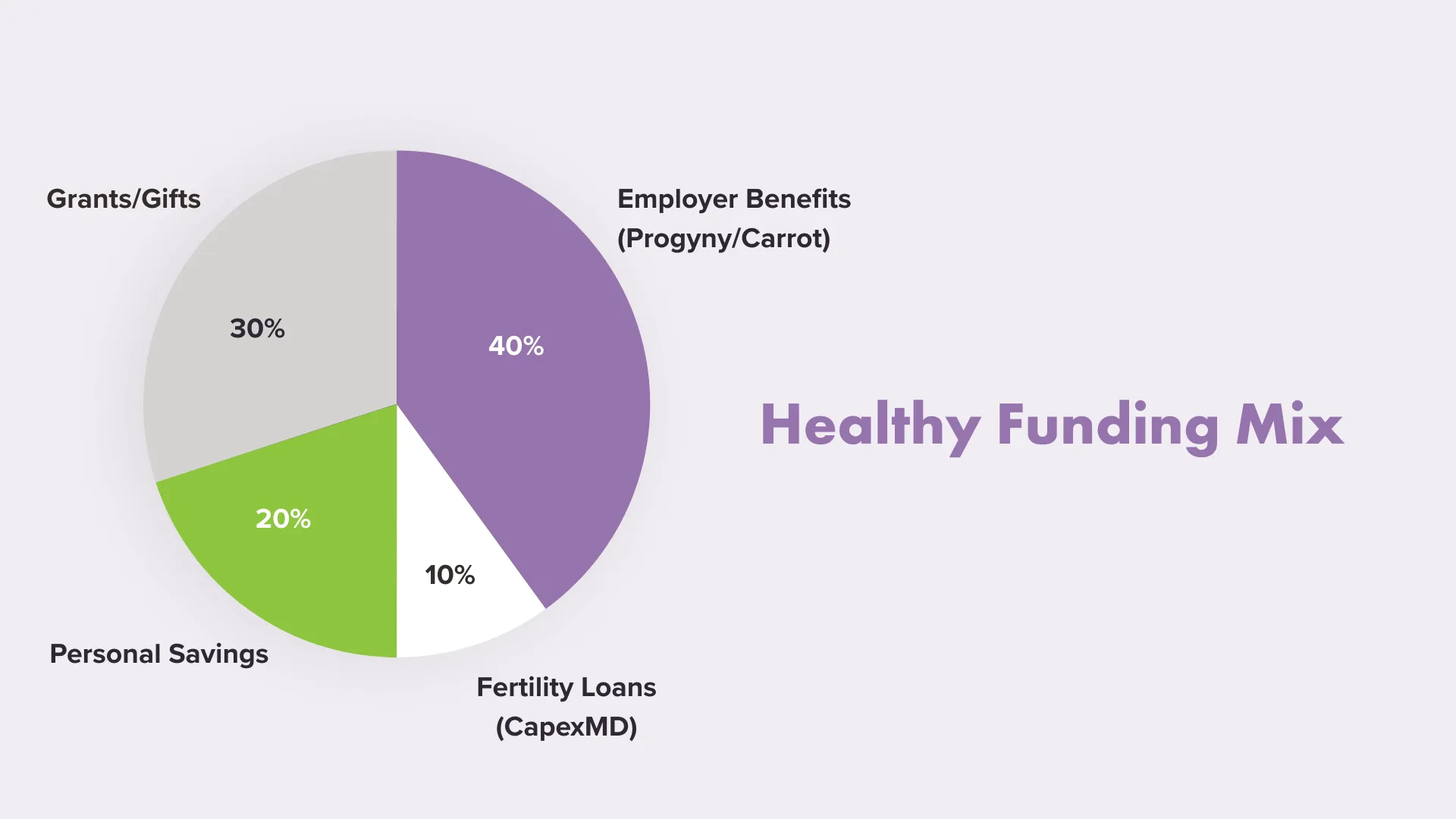
Step 3: Build a funding stack (benefits + grants + financing) instead of relying on one source.
Step 4: Review tax questions early with a CPA so you plan documentation correctly.
Step 5: Confirm payment timing and cash-flow milestones before signing with vendors.
Frequently Asked Questions (FAQ)
Q: Can I use a friend as a surrogate to save money?
A: Yes. This is known as Identified Surrogacy. It allows you to save significantly by eliminating the need for agency recruitment. However, your friend must still pass strict medical and psychological screening to ensure the pregnancy is safe.
Q: Which surrogacy grant is the easiest to get?
A: It varies. Most grants are merit or need-based and highly competitive. Baby Quest and Gift of Parenthood are the most popular, but local grants (like the Pay It Forward Fertility Foundation) often have fewer applicants.
Q: Is international surrogacy safe?
A: It depends. Canada is safe but slow (altruistic only). Countries like Colombia and Mexico are becoming popular, affordable options (~$70k), but they carry higher legal complexity regarding citizenship than the U.S.
Q: Does financing cover the surrogate’s compensation?
A: Yes. Providers like Future Family and PatientFi offer dedicated plans specifically designed to cover “3rd party reproduction” costs. Additionally, loans from lenders like Prosper send funds directly to you, giving you the flexibility to use the cash for any expense, including agency fees or surrogate compensation.
Before choosing financing, it helps to map your expected payment stages. Review our surrogacy cost breakdown and payment timeline to see how much surrogacy costs in the U.S. in 2026 and when major expenses usually occur.
Final Thoughts
Surrogacy is an investment in your future family. By combining employer benefits, competitive financing, and smart planning, you can make this journey affordable.
Ready to explore your options?
Contact RSMC’s Financial Coordinators today to discuss our exclusive financing partners and see if you qualify for a free insurance review.
Schedule a Free Financial Consultation



Table of Contents
- Key Takeaways:
- 1. Compare Global Surrogacy Costs
- 2. Maximize Employer Fertility Benefits
- 3. Independent (“Indy”) vs. Agency Surrogacy
- 4. Specialized Fertility Loans
- 5. Apply for Surrogacy Grants
- 6. Tax Deductions for Surrogacy
- 7. Identified Surrogacy (Bringing Your Own Surrogate)
- Frequently Asked Questions (FAQ)
- Final Thoughts