

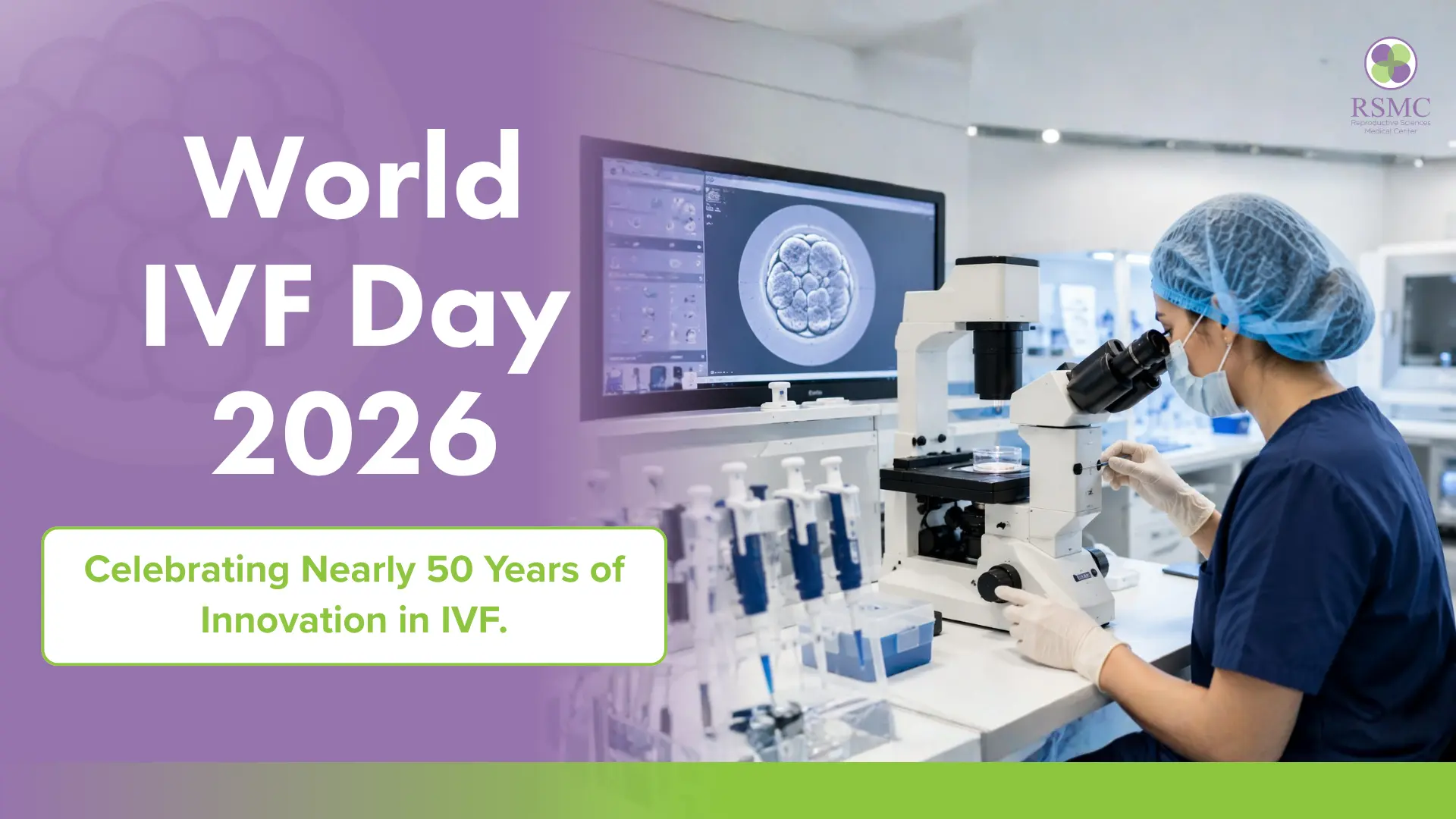
From One Historic Birth to Modern Fertility Care
Nearly 50 years ago, the birth of a single baby changed reproductive medicine forever.
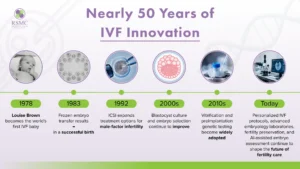
On July 25, 1978, Louise Brown became the world’s first child born through in vitro fertilization
(IVF).
What was once considered an experimental procedure proved that pregnancy could begin
outside the body and result in the birth of a healthy child.

Every year, the fertility community celebrates World IVF Day, also recognized as World
Embryologist Day, to mark that historic achievement.
Today, the celebration represents much more than one milestone. It recognizes decades of
scientific progress that have made fertility treatment safer, more precise, and more personalized
than ever before.
How IVF has Changed Since 1978
The science behind IVF has never stood still.
Over the past five decades, advances in embryology, laboratory technology, reproductive
genetics, and fertility preservation have transformed IVF into one of the most sophisticated
fields in modern medicine.
Patients today benefit from innovations that simply did not exist when the first IVF baby was
born.
More Personalized Treatment
No two patients have the same medical history or fertility goals. Age, ovarian reserve, hormone
levels, previous treatment outcomes, and underlying health conditions all influence how IVF is
planned.
Rather than following a single standard approach, fertility specialists now tailor treatment to
each patient’s individual needs.
At Reproductive Sciences Medical Center (RSMC), physicians draw from more than 40 IVF
protocols, allowing treatment plans to be customized for a wide range of clinical situations,
including complex infertility cases.
Better Laboratory Technology
The IVF laboratory plays an important role in every treatment cycle.
Modern embryology labs use carefully controlled environments to support embryo development.
Temperature, air quality, culture conditions, and quality control all contribute to creating
consistent laboratory conditions.
These advances allow embryologists to work with greater precision while helping protect
developing embryos during their earliest stages.
New Options for Fertility Preservation
Freezing eggs, sperm, and embryos has expanded reproductive options for many people.
Some patients preserve fertility before cancer treatment or other medical care. Others choose to
freeze eggs or embryos while planning for the future.
Advances in vitrification, a rapid freezing technique, have significantly improved survival rates
after thawing and made fertility preservation a routine part of modern reproductive medicine.
Better Genetic Insight
For some patients, preimplantation genetic testing (PGT) provides additional information before
embryo transfer.
While PGT is not appropriate for every IVF cycle, it may help identify certain inherited genetic
conditions or chromosomal abnormalities in specific clinical situations, per ASRM patient
education resources.
Used thoughtfully, it allows physicians and patients to make more informed treatment decisions.
Innovation Has Expanded Who IVF Can Help
When IVF was first introduced, its primary purpose was to help couples experiencing infertility.
Today, fertility care supports many different family-building goals.
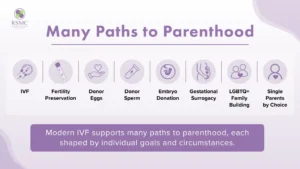
IVF may be part of treatment for people facing infertility, individuals preserving fertility before
medical treatment, LGBTQ+ individuals and couples, single parents by choice, and intended
parents using donor eggs, donor sperm, embryo donation, or gestational surrogacy.
The science has evolved, but so has the understanding that every family is different. Modern
fertility care reflects that diversity by offering more treatment options and more personalized
approaches than ever before.
What World IVF Day Means Today
World IVF Day celebrates a breakthrough in medicine, but the real story is what’s happened
since: progress that shows up daily, inside fertility clinics and embryology laboratories around
the world.
That progress rarely looks like a single discovery anymore. More often, it’s physicians
fine-tuning treatment, embryologists watching over developing embryos, and patients making
more informed decisions — small improvements that add up to real change.
In the United States, this shift has made fertility care more accessible. Employer-sponsored
benefits have expanded, awareness has grown, and several states have strengthened
insurance requirements for fertility treatment. Access still varies by state and by plan, but more
people are starting care earlier, with a clearer sense of what’s available to them. Many come
from outside the U.S. too, drawn by donor programs, fertility preservation, and gestational
surrogacy options they can’t find at home.
That’s what World IVF Day ultimately marks: not one moment in 1978, but a field that keeps
opening new paths to parenthood.
World IVF Day at a Glance
Date: July 25
Why It’s Celebrated:
Commemorates the birth of Louise Brown, the world’s first IVF baby.
Also Known As: World Embryologist Day.
What It Honors:
Scientific innovation, embryologists, physicians, and the teams advancing
fertility care around the world.
The People Behind Modern IVF
When most people think about IVF, they picture appointments with a fertility specialist. But every
treatment cycle depends on a team of experts working together behind the scenes.
Physicians develop treatment plans, nurses guide patients through each stage of care, and
embryologists oversee the laboratory procedures that support fertilization and embryo
development.
Other specialists, including andrologists, genetic counselors, ultrasound technicians, and patient
coordinators, each play an important role, and you can meet the RSMC team here.
Successful IVF isn’t the result of one person or one technology. It’s the product of collaboration,
experience, and careful attention to detail at every step.
Why Embryologists Matter
Embryologists are the laboratory scientists at the center of IVF.
They work with eggs, sperm, and embryos during the earliest stages of development,
performing highly specialized procedures under carefully controlled laboratory conditions.
Their work requires technical expertise, precision, and constant monitoring.
Depending on a patient’s treatment plan, an embryologist may:
- Prepare eggs and sperm for fertilization
- Perform intracytoplasmic sperm injection (ICSI) when appropriate
- Monitor embryo development over several days
- Assess embryo quality
- Freeze and thaw eggs or embryos using vitrification
- Assist with embryo biopsy for preimplantation genetic testing (PGT)
- Maintain strict laboratory quality standards
Patients may never meet the embryologist caring for their embryos, but their expertise is an
essential part of every IVF cycle.
Science Matters. So Does Experience.
Technology has transformed IVF, but technology alone doesn’t create successful treatment.
Experienced physicians know when to adjust a protocol based on a patient’s medical history.
Embryologists make careful laboratory decisions throughout embryo development. Nurses and
patient coordinators help ensure each step stays on track.
At RSMCenter, this collaborative approach brings physicians, embryologists, and laboratory
professionals together under one roof.
Combined with individualized treatment planning and an on-site embryology laboratory, that
teamwork helps deliver care tailored to each patient’s needs.
Dr. Kevin Kiboong Oum, PhD, HCLD
Laboratory Director
Double board-certified High Complexity Laboratory Director (HCLD)
More than three decades of embryology experience
Early contributor to ICSI research
Looking Ahead
Nearly five decades after the birth of the world’s first IVF baby, reproductive medicine continues
to move forward.
Researchers are exploring new ways to personalize treatment, improve embryo assessment,
refine laboratory techniques, and better understand the biology of early embryo development.
Artificial intelligence is also beginning to support embryologists by providing additional tools for
embryo evaluation, while advances in reproductive genetics continue to improve clinical
decision-making.
The future of IVF will likely bring even more precise, individualized care. Yet one thing is unlikely
to change: successful treatment will continue to rely on the expertise of experienced fertility
specialists working together on behalf of every patient.
Considering IVF? Let’s Start the Conversation.
Whether you’re exploring fertility treatment for the first time or considering your next steps after
previous care, understanding your options is an important place to begin.
At RSMC, our team provides individualized fertility care backed by advanced laboratory
technology, experienced physicians, and a commitment to evidence-based medicine.
Schedule a complimentary consultation to learn more about IVF and the treatment options
that may be right for you.
Frequently Asked Questions
Why is World IVF Day celebrated on July 25?
World IVF Day is observed each year on July 25 to commemorate the birth of Louise Brown in
1978, the world’s first baby conceived through in vitro fertilization (IVF).
Is World Embryologist Day the same as World IVF Day?
Yes. Around the world, World Embryologist Day is celebrated alongside World IVF Day on July
25. The occasion recognizes both the scientific breakthrough of IVF and the embryologists
whose expertise makes assisted reproduction possible.
How has IVF changed over the past 50 years?
IVF has become more personalized and more precise. Advances in embryology, laboratory
technology, embryo freezing, reproductive genetics, and individualized treatment planning have
expanded who can benefit from fertility care and improved many aspects of the IVF process.
What does an embryologist do?
Embryologists are laboratory scientists who work with eggs, sperm, and embryos during IVF
treatment. They perform procedures such as fertilization, embryo culture, cryopreservation, and
embryo assessment while maintaining carefully controlled laboratory conditions.
Can IVF help people beyond infertility?
Yes. Today, IVF may also support fertility preservation, donor egg or donor sperm treatment,
embryo donation, LGBTQ+ family building, single parents by choice, gestational surrogacy, and
some patients pursuing genetic testing before embryo transfer.



Table of Contents
- From One Historic Birth to Modern Fertility Care
- How IVF has Changed Since 1978
- Innovation Has Expanded Who IVF Can Help
- What World IVF Day Means Today
- The People Behind Modern IVF
- Why Embryologists Matter
- Science Matters. So Does Experience.
- Looking Ahead
- Considering IVF? Let’s Start the Conversation.
- Frequently Asked Questions